
Twelve ways to ask the same question.
Academy Care is a learning platform for NDIS providers. A registered nurse's clinical knowledge became twenty-six training modules, and every knowledge check in them can be answered as a plain list or played as a game. The people doing this training are support workers finishing a shift, not office workers at a desk with a coffee.
- Role
- Sole developer
- Status
- In production
- Modules built
- 26
- Question types
- 12
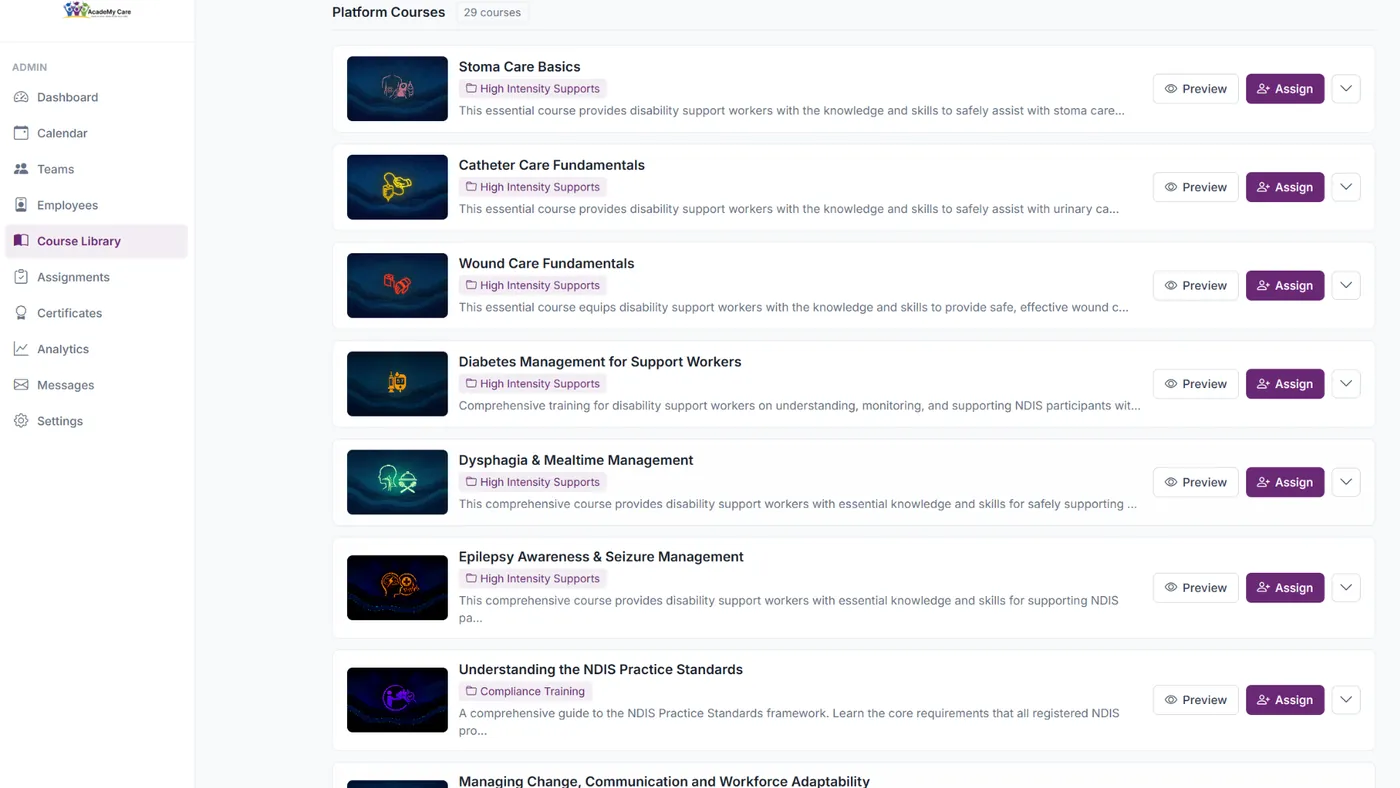
It started as one nurse's knowledge
A registered nurse knows what actually goes wrong in someone's home at six in the morning. That knowledge existed as documents, briefings and years of experience, which is not the same thing as a course. The work was translating it: sequencing it into lessons, deciding what has to be understood before the next thing makes sense, and writing a check at the end that proves something was learned rather than clicked through.
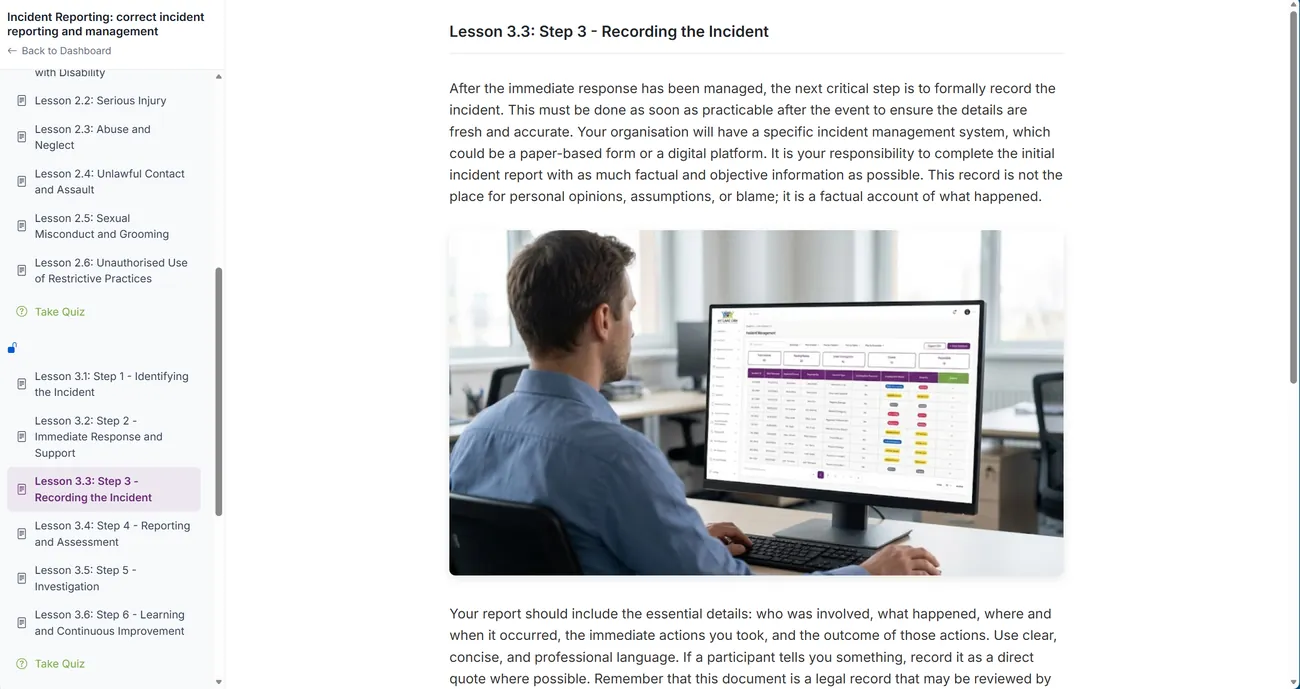
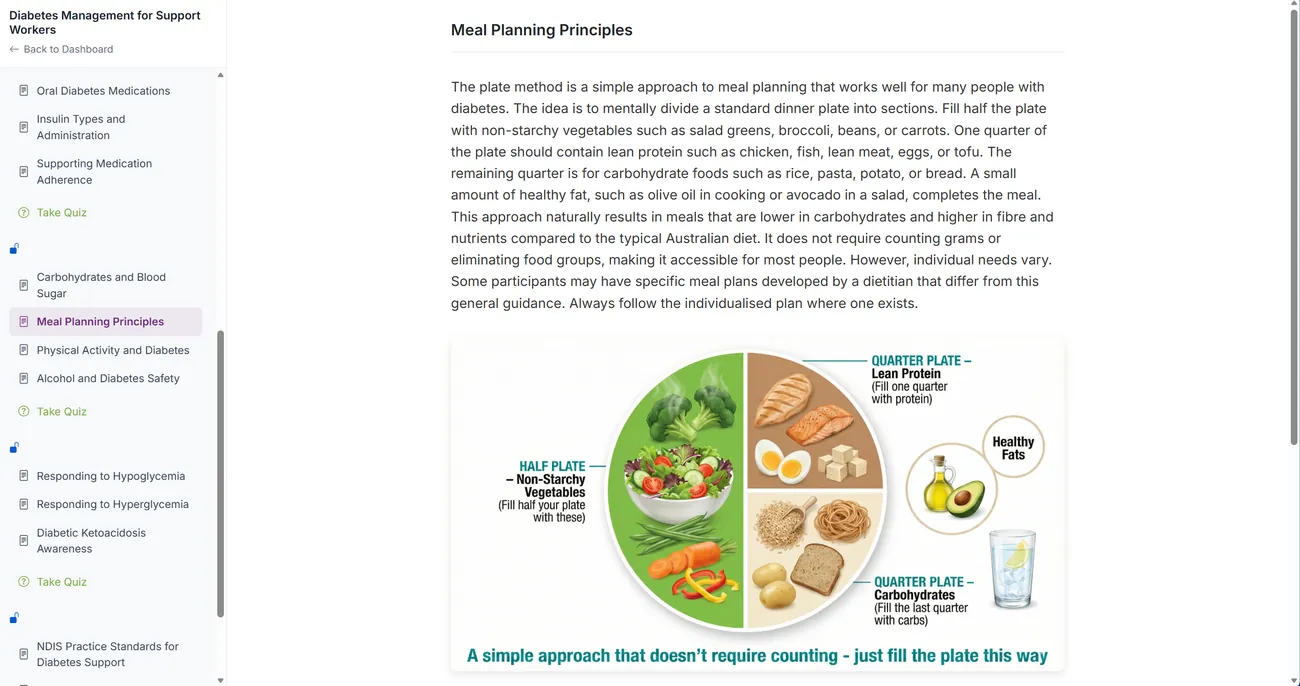
Four ways to answer, and eight more
Gamified compliance training is an easy thing to be cynical about, and the cynicism is usually earned. So the games here are not the only route through. Every question exists in two renderings, and the person answering picks which one they get.
Answered as a list
The formats anyone who has done online training will recognise. Nothing moves, nothing is timed, and a screen reader can get through all of it.
- Multiple choice
multiple_choice - True or false
true_false - Select all that apply
multiple_select - Fill in the blank
fill_blank
Answered as a game
Eight mechanics, each suited to a different shape of question. Ordering becomes a launch sequence, categorising becomes sorting, and matching becomes drawing a line between two things. Seven of them are shown further down this page.
- Keypad escape room
keypad - Balloons
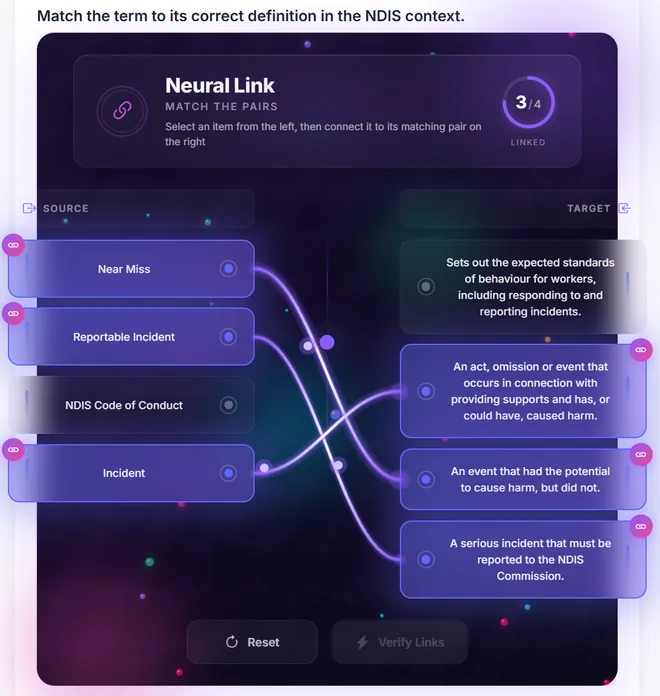
sorting - Neural Link
matching - Compliance fruit ninja
ninja - Forest path
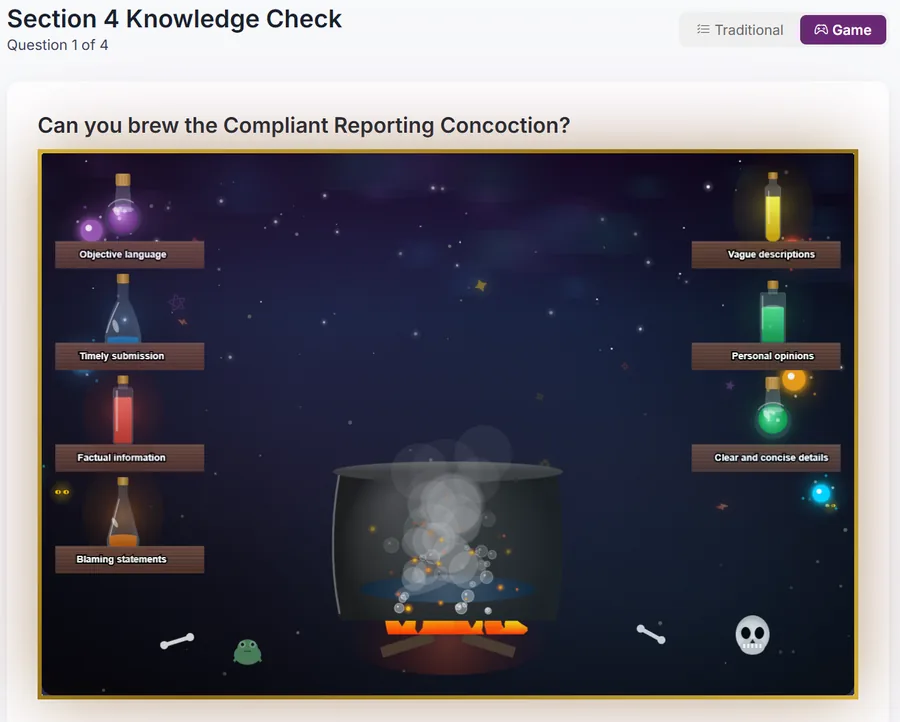
forest - Potion maker
potion_maker - Starship launch
starship - Wheel of knowledge
wheel_of_knowledge
The choice is made at first login and can be changed in settings at any time. On a phone the platform defaults to the list version and asks for confirmation before it hands anyone a game, because a fruit ninja on a six inch screen is a worse experience than a list and pretending otherwise helps nobody. Someone who picks the list is also kept off the leaderboards by default, so opting out of the fun is not a public act.
Two shapes of question, two mechanics
One of these is from incident reporting, where the answer is a set of details that either belong on a statutory form or do not. The other is from infection control, where every step is obviously correct and the entire risk sits in the order they happen. Those are not the same question wearing different clothes, so they are not asked the same way.
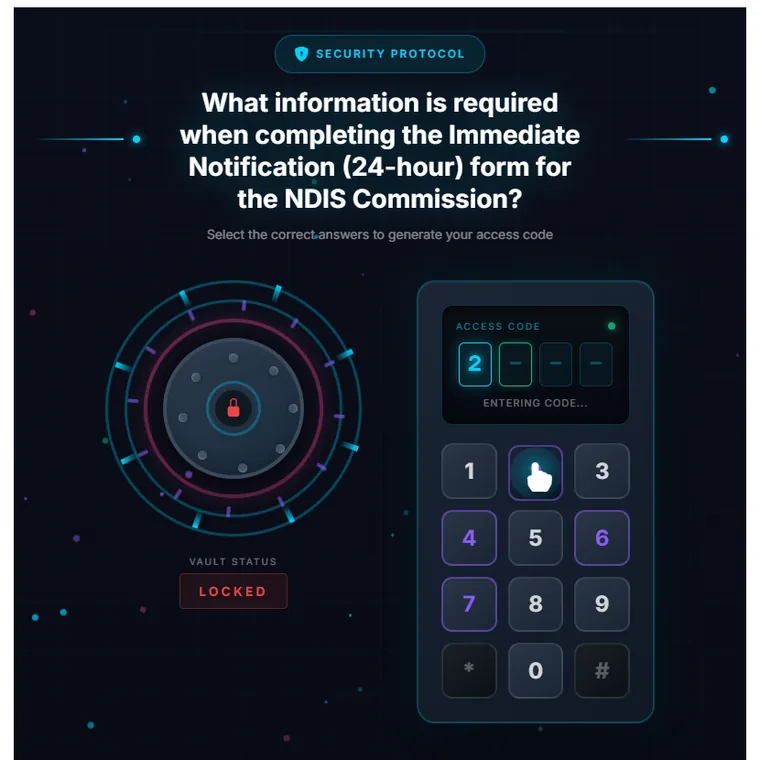
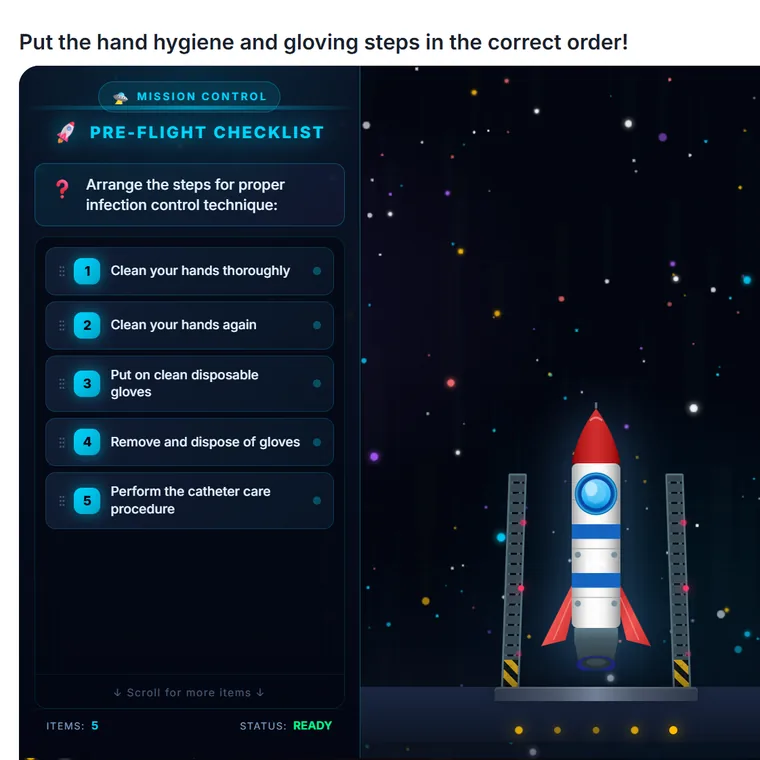
Neither of these is a separate exam. Each is a rendering of an ordinary question record, and the attempt written afterwards holds the score, the time and the answer without noting how it was presented, because that is not something a regulator should have to care about.
Built so the mechanic fits the question
The temptation with this sort of thing is one game engine with the questions poured into it. That produces a quiz with a hat on. Each of these was built for a shape of question that suits it, which is why there are eight rather than one.
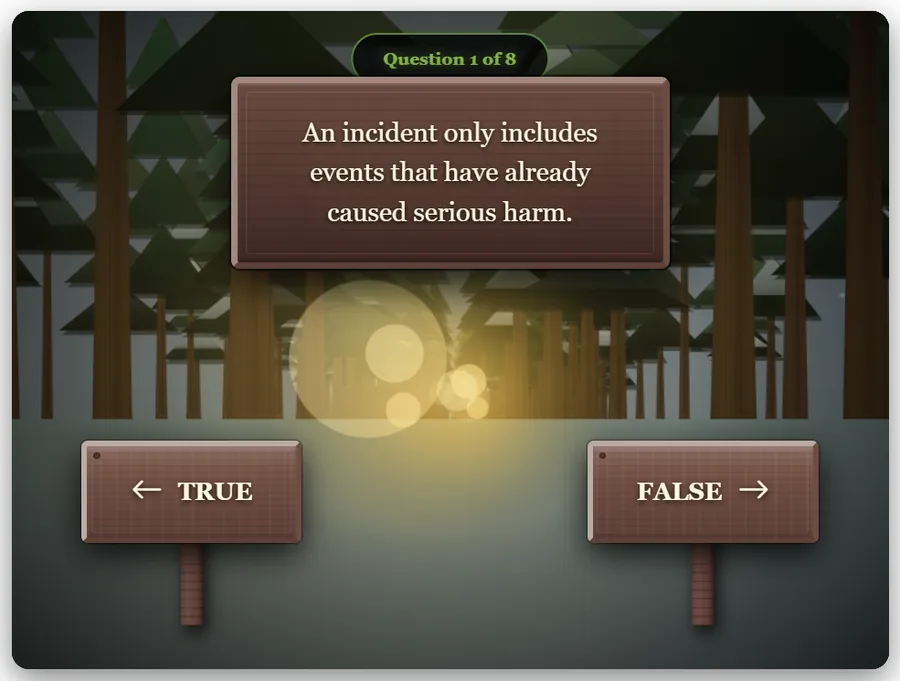
Forest pathTrue or false, as a fork in a track. The statement is on the sign and the two paths are the answer. Eight of them in a row, and the walk is the quiz.
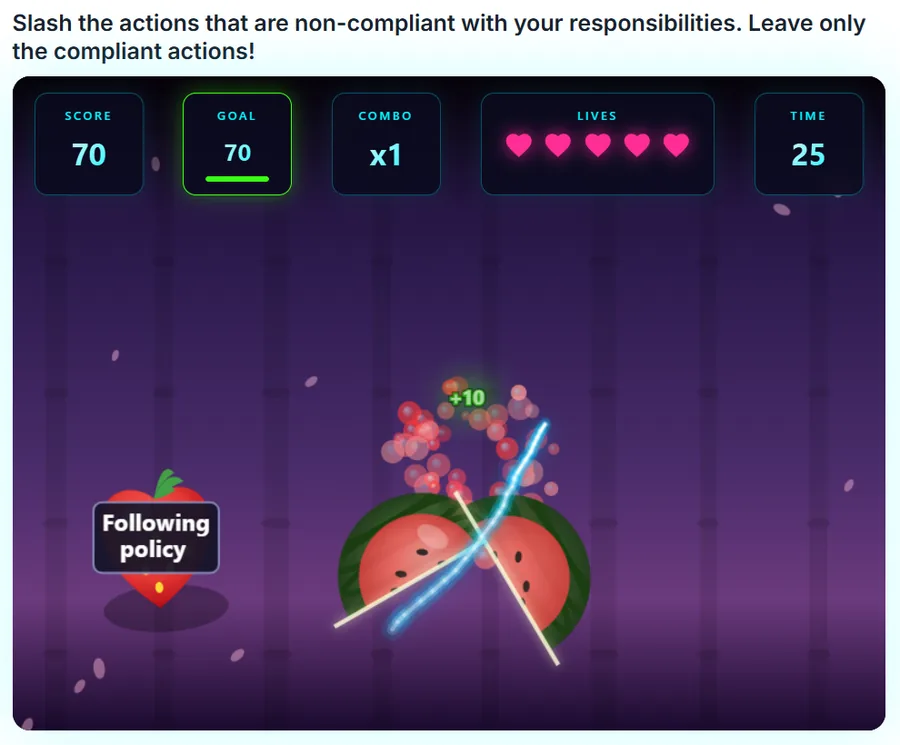
Compliance fruit ninjaSlash the non-compliant actions and leave the compliant ones alone. Doing nothing is an answer here, which is the part that makes it a real question rather than a reflex test.
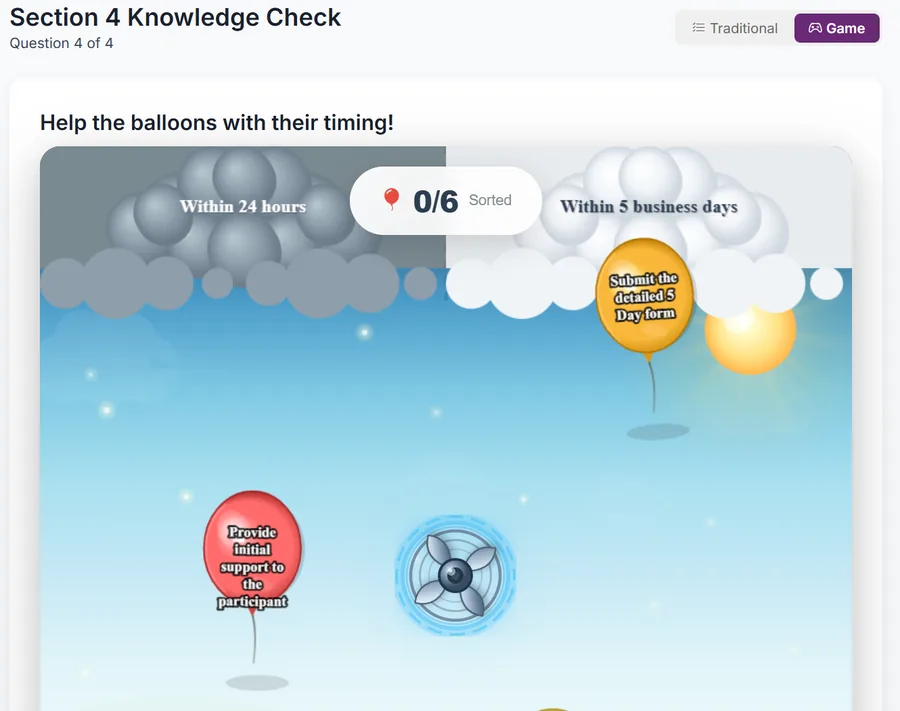
BalloonsSorting into categories, where the categories are the reporting deadlines. Every balloon carries an obligation and has to end up under the right cloud. Note the Traditional and Game toggle sitting in the corner of the header.
Neural LinkMatching, drawn as connections rather than a table of dropdowns. Four NDIS terms against four definitions, and the definitions are the real wording, not a paraphrase that would teach the wrong thing.
Potion makerCategorising, where only the right ingredients go in the pot. Objective language and factual information belong in a report. Blaming statements and personal opinions do not.
Four decisions that took the longest to get right
A platform that issues evidence of training has to be right about the boring things, because the boring things are what an auditor reads. These four are the ones worth writing down.
The game is a rendering, not a different exam
Every game type has a plain rendering of the identical question, built alongside it rather than bolted on afterwards. The question, the marking and the pass mark are the same object; only the presentation changes.
The attempt that gets stored holds the score, the time taken, the attempt number and the answer given. It does not hold which mode was used, because a provider proving compliance should never have to explain that one worker played and another read.
Game wording gets stripped in the plain view
Authors write question titles in the voice of the game: navigate the forest, brew the concoction, launch the report. Shown above a list of checkboxes, that wording is nonsense at best and confusing at worst, because it refers to mechanics the reader cannot see.
So the plain view substitutes the topic heading the author wrote for the question, or shows no heading at all where the instruction on the block already explains the task. Small, and the difference between an accessible alternative and a token one.
Annual training that books itself
Compliance training expires. Somebody has to notice that a worker's manual handling certificate lapses in three weeks, and in most organisations that somebody is a spreadsheet nobody owns.
Completing a course can create the schedule for its own next round: monthly, quarterly, twice yearly, annually or a custom number of days, aimed at one person, a team or everyone. The administrator gets told a week before it triggers rather than the morning it is already overdue.
Status values are lowercase everywhere, by rule
Course and assignment statuses are stored as lowercase strings. Comparing one against an uppercase literal is perfectly legal SQL: it raises nothing, logs nothing, and returns an empty set. A whole class of mistake in this codebase would therefore present as a screen with nothing on it rather than as an error anyone could search for.
So the casing is not left to memory. Enum member names are lowercase and equal to their values, raw SQL binds the value rather than typing the string, and ORM filters cast the column before comparing. The rule sits at the top of the project's own instructions, where the next person to touch it reads it before writing a query rather than after. The conventions that protect you are the ones you cannot forget to follow.
Someone has to answer for all this
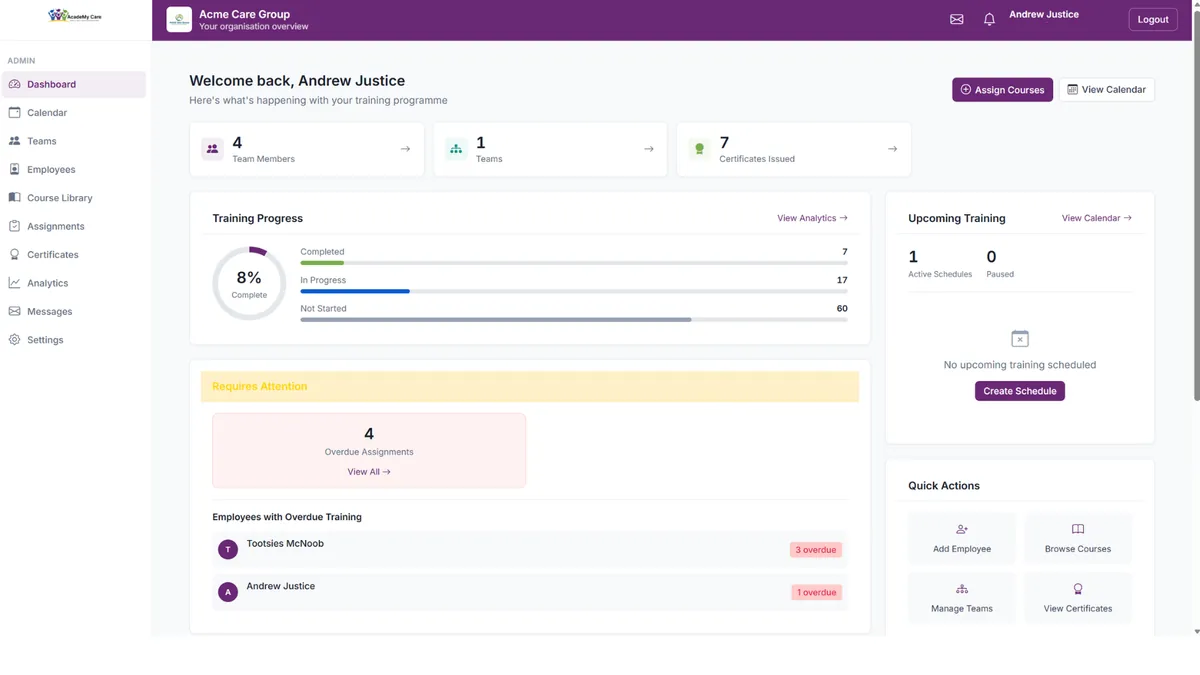
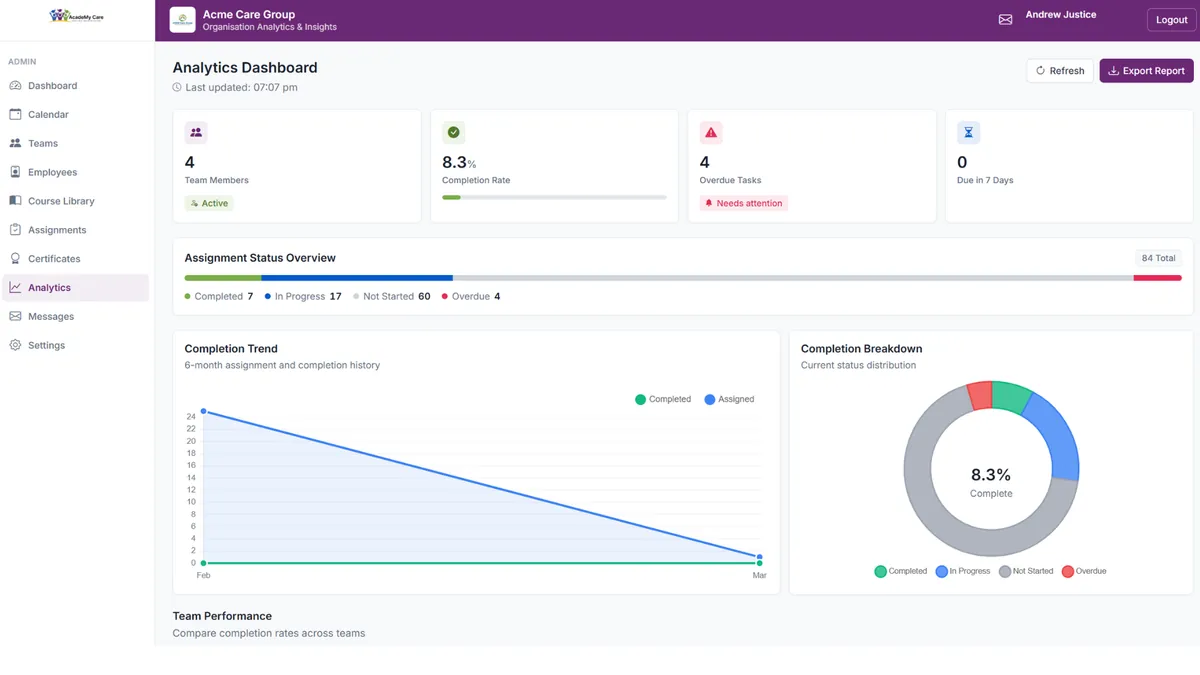
The games are what a support worker sees. What the provider sees is a different product: who has been assigned what, who is behind, what expires next, and a certificate that stands up when somebody asks to see it.
A certificate that can be checked
Each certificate is generated as a PDF and carries a unique twelve character verification code, a certificate number and an expiry date. The code is generated with a cryptographic random source rather than a counter, so certificate numbers cannot be guessed by adding one to somebody else's.
A course designer, not a content request form
Courses, sections, lessons, media and quizzes are all built inside the platform. A provider with their own policies and their own induction can put them in themselves, in the same shell as everything else, without a developer in the loop.
A partner API, separate from the front door
A care provider's own CRM can create organisations, add staff, assign courses and pull compliance reporting through a key based API that is deliberately not the same authentication surface a person signs in through. Two doors, two sets of locks, one of which can be revoked without locking anybody out.
Live, and owned by the business that paid for it
It runs at academycare.com.au on infrastructure the business holds the account for: an Angular front end served by Nginx, a Python API under systemd, and PostgreSQL behind both. Production secrets come out of Azure Key Vault rather than sitting in a file on a server, so a person leaving does not mean a key leaving with them. No container platform, no orchestration layer, and nothing in the stack that stops working when somebody forgets to renew a subscription.